What Are You Really Listening To?

Follow our accounts below to stay connected on all our news!





Rapid adaptation is often presented as evidence that life is evolving in unlimited ways. But it may instead show how life was designed with built-in flexibility from the start. A recent study on cichlid fish highlights “supergenes,” sections of DNA that help preserve coordinated traits while still allowing organisms to respond to changing environments. Conventional scientists may point to this as another example of evolutionary innovation. Yet the real issue is not whether living things can vary—it is whether that variation creates entirely new systems. This study provides a clear example of adaptability within an organized biological framework, not the origin of a new one.
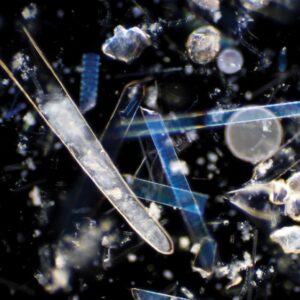
Rapid change is often presented as proof that evolution can build new life forms. But it may instead show how living things were designed to adapt within limits. A recent study reports that several new plankton species appeared quickly after the supposed Chicxulub impact, with some showing up in less than 2,000 years. Conventional scientists describe this as “shockingly fast” evolution. Yet the real issue is not whether organisms can change under stress—it is whether those changes create new biological systems. The study mainly reports differences in shell shape, not new cell parts, new pathways, or new information. This provides a clear example of rapid variation within a created kind, not the origin of a new one.
What if one of the most iconic structures in the world wasn’t ultimately inspired by human imagination—but by the hidden design inside your own body? When Eiffel Tower was conceived, its engineer looked beyond traditional architecture and found his blueprint in the intricate internal structure of the human femur—where strength, efficiency, and precision are already perfected. The result was a structure that has stood for over a century, not because it was merely innovative, but because it echoed a design that had already proven itself in living systems. This raises a deeper question: if even our greatest engineering achievements must borrow from biology, what does that say about the true source of the design we see in life itself?